Updated · No Limit Polishing, Sealy TX
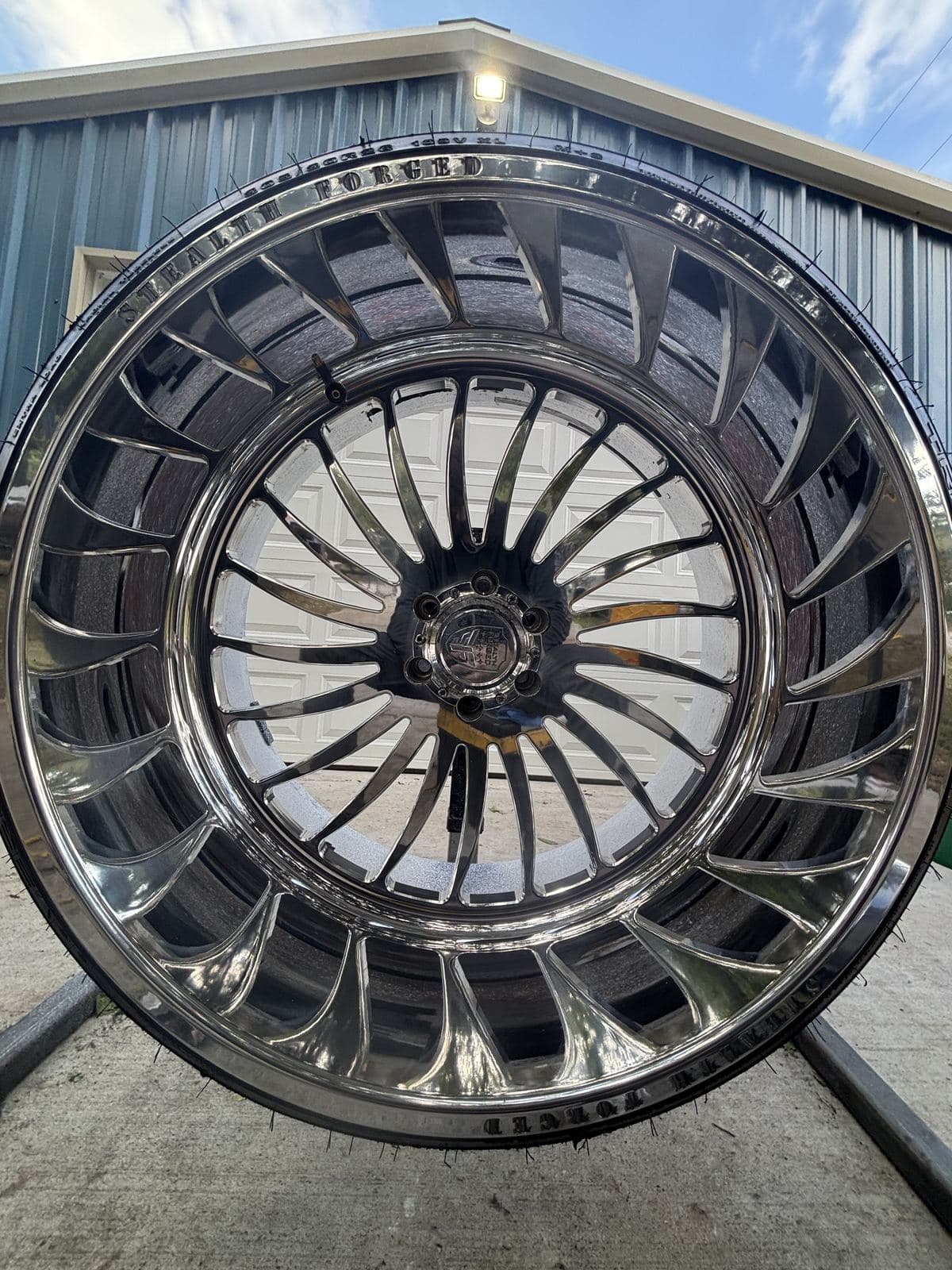
Why polished wheels dull so fast here
Uncoated polished aluminum is bare metal, and bare aluminum oxidizes. Heat, humidity and rain speed that up, and Gulf Coast Texas has plenty of all three. Add brake dust — which is hot, abrasive and slightly corrosive — and a polished wheel that isn't washed can look hazy within weeks.
The weekly routine
The single biggest factor is how often brake dust and road film sit on the wheel.
- Rinse the wheel first to knock off loose grit before you touch it
- Wash with a pH-neutral car soap and a soft mitt or brush used only on wheels
- Rinse well, including inside the barrel and around the lugs
- Dry completely with a clean microfiber — water spots etch into bare aluminum
- Wash wheels in the shade when they're cool, never hot off the highway
What never to put on polished aluminum
Most damage to polished wheels comes from the wrong cleaner, not from driving.
- Acid-based or 'all-wheel' cleaners from the auto parts store — fine on painted wheels, harsh on bare polish
- Degreasers and tire shine overspray left to dry on the face
- Stiff brushes, scouring pads or dirty towels that have touched tires
- Automatic car washes that spray strong chemicals on wheels
Polishing between visits
A quality aluminum metal polish applied by hand every month or two — more often on a daily driver — takes off light oxidation before it builds. Work in small sections, buff off with a clean microfiber, and expect a little black residue on the towel; that's oxidation coming off.
When hand polishing stops bringing it back, it's time for a professional acid wash and polish, or a full sand and polish if scratches have built up.
When ceramic coating is worth it
If you won't hand polish regularly, ceramic coating applied over a fresh full sand and polish is the best upgrade. It puts a hard, slick layer over the metal so brake dust and water wash off instead of sitting on it. You still wash the wheels — you just stop polishing them.