Updated · No Limit Polishing, Sealy TX
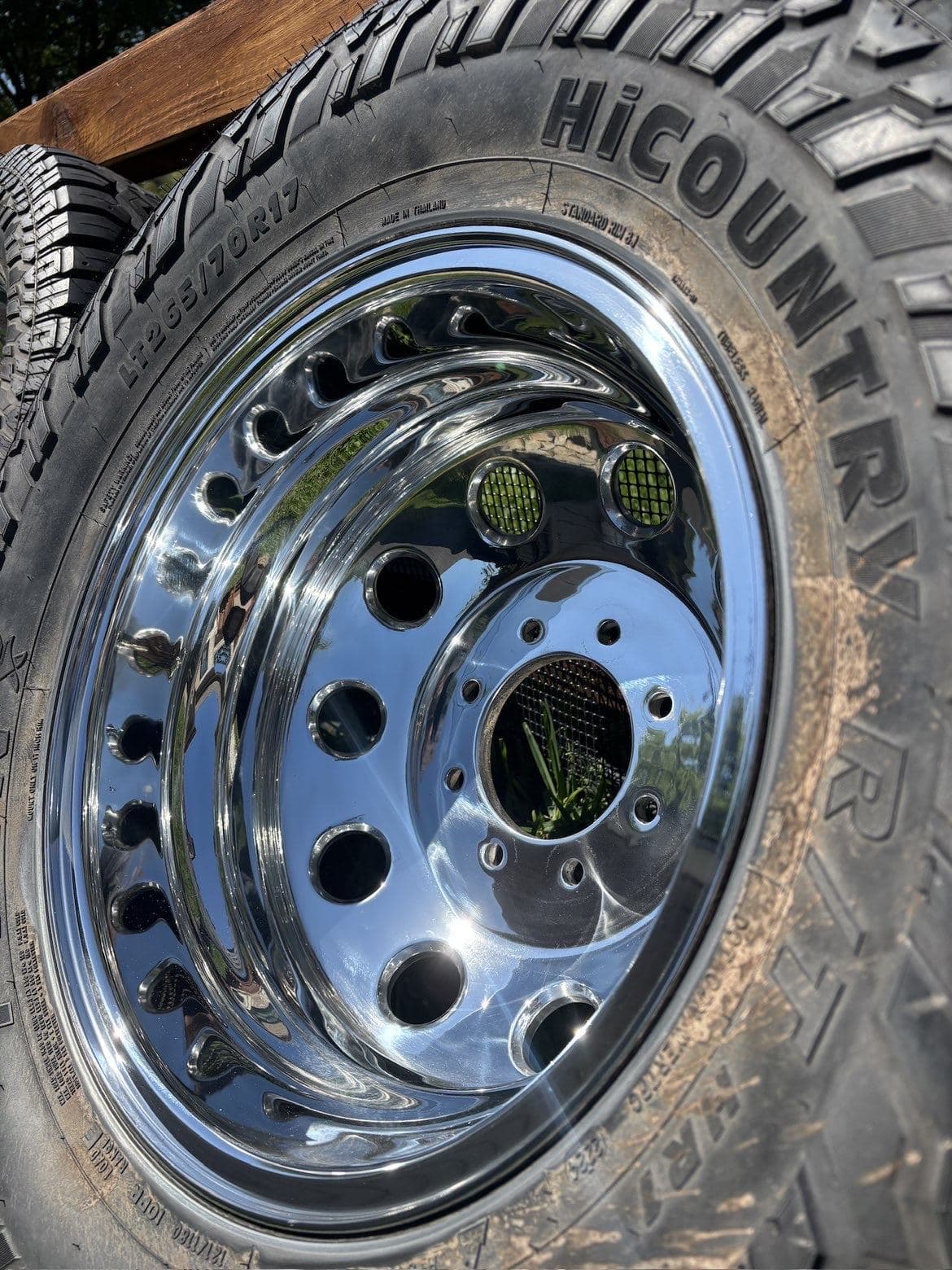
The short answer
If your wheels are dull, gray, chalky or spotted but smooth to the touch, an acid wash and polish will usually bring them back. If you can see or feel scratches, swirl marks, pitting or curb rash, you need a full sand and polish — chemicals can't remove damage that's cut into the metal.
What an acid wash actually does
Bare aluminum reacts with air and water and grows a thin oxide layer. On a polished wheel that shows up as haze, then a chalky white or gray film, then spotting where water dried. Brake dust and road film bake on top of it.
An acid wash uses an aluminum brightener to dissolve that layer and the grime with it. The wheel is rinsed and neutralized, then polished. Because nothing is being sanded, it's the faster and less expensive option, and on wheels that are only oxidized the result is bright and clean.
- Removes: oxidation, chalkiness, water spots, brake dust, road film
- Doesn't remove: scratches, swirl marks, pitting, curb rash
- Best for: work trucks, duallies and factory wheels that have just gone dull
What a full sand and polish does
A full sand and polish starts by machine sanding the wheel to take the surface below the damage. The sanding marks are then removed with progressively finer grits until the surface is smooth, and polishing compounds take it the rest of the way to a mirror.
It's slower and costs more because it's real metal work, spoke by spoke. The payoff is a finish that's deeper and clearer than an acid wash can produce — and it's the only finish worth putting ceramic coating over.
- Removes: scratches, swirls, pitting, light-to-moderate curb rash, oxidation
- Result: a true mirror finish
- Best for: forged wheels, show trucks, anyone who wants the full mirror
A two-minute test you can do in the driveway
Wash one wheel and let it dry. Run a fingernail across the face and the lip. If it glides and the wheel just looks cloudy, it's oxidation — acid wash territory. If your nail catches, or you can see fine circular scratches in direct sun, the damage is in the metal and needs sanding. Peeling or flaking film means a clear coat that has to come off first, whichever route you take.
How long each one lasts
Neither finish is permanent on uncoated aluminum — it will start to oxidize again. How fast depends on washing, weather and miles. A sanded mirror finish starts from a smoother surface, so it tends to stay looking good longer and comes back with a lighter touch-up. Ceramic coating over a fresh full sand and polish slows oxidation the most.